Main Content
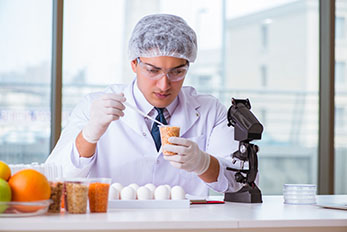
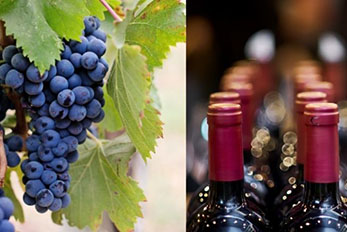
Build your sensory evaluation skills and develop a greater understanding of the science behind the aroma, taste, color, and texture of successful products.

Course Status Notice – Not Scheduled
We do not have an offering of this course scheduled at this time. Please join our email list to be notified when the next offering is scheduled!
Jump to: Overview | Instructor | Reviews | CE Credits | Contact Us | Related Courses | Join Email List
Course Details
Course Name: Sensory Evaluation
Course Code: LF0606CA26
Date of Most Recent Offering: June 23 and 24, 2026 (Canceled)
Course Overview
Great food products delight many senses all at once. In fact, the sensory quality of a food product is the single most important factor influencing its success in the marketplace. You can increase the chances of a product’s success in today’s food and pharmaceutical markets if you can understand and measure the sensory quality of foods.
Through lectures and demonstrations, you will:
- Examine the pros and cons of different food sensory tests, set up testing procedures, and evaluate real products.
- Develop the practical skills necessary to set up your own discrimination tests, create testing protocol, apply real test procedures, and interpret what the results mean for your food product.
- Learn how to evaluate the sensory quality of food products using statistical descriptive analysis.
- Perform statistical tests using easy-to-learn steps and then progress to more complex assessment techniques.
NOTE: A background in statistics is NOT required for this course. For more advanced food science statistical training, be sure to register for Making Sense of the Numbers: Statistics for Food Scientists.
Featured Topics
- Discrimination Tests: Since there is no universal test method, each problem must be thoroughly analyzed before a specific test method is selected. Come learn the discrimination test methods designed to determine whether there is a perceived difference between samples.
- Descriptive Analysis: Learn the analysis method models used to determine specific issues. Learn the types of panels, issues involved in the development of program, what to demonstrate, and the specific description analysis methods.
- Consumer Testing Procedures and Issues: Learn the methods used to assess consumer responses to products, product ideas, and specific product characteristics that give a snapshot of the potential success of a product.
- Statistical Discussion: Learn the statistical analysis of rating scale data, how to monitor the sensory panelist performance, how to design and analyze discrimination tests, how to sample serve order designs, product formulation designs, and methods relating variables. Don’t worry – a background in statistics is NOT required!
- Sensory Data Relations: Learn why it’s important to validate data, how to validate it using different testing methods, and understand the product, the processes and the consumer response.
- Flavor Descriptive Terminology and Time Intensity Measurement: Learn the different flavor profiles, methods, different descriptive terminology, and how flavor is enhanced by the environment. The key to making a food taste great? Making the product delight many of the senses at once.
- Recent Developments in Sensory Research: Learn the most recent developments in the field of Sensory Research.
Who Should Attend?
Any food industry professional who wants to better understand the sensory characteristics of food will benefit from participating in this training course. Past attendees have included:
- Food Scientists
- Food Technologists
- Professionals Involved in Sensory Evaluation of Food and Beverage Products
- Food-related Product Researchers and Developers
- Quality Control and Quality Assurance Specialists
- Food/Beverage Marketers or Production Employees
- Industry Professionals who Conduct Consumer Preference/Acceptance Tests
- Lab Technicians and Managers
- Chefs and Culinary Project Managers
- Marketing Managers and Research Support Staff
Meet Your Instructors
Faculty Coordinator
Dolf DeRovira, Flavor Dynamics, Inc.

Dolf remains active in the development of new flavor products at his company, Flavor Dynamics, Inc. He holds a joint patent with the Monell Institute in Philadelphia and has taught courses on flavor descriptive nomenclature and flavor technology. He is past President of the Society of Flavor Chemists and the Chemical Sources Association and remains an active member of both. He is author of the Dictionary of Flavors (both editions) and is Education Chairman in the Flavor and Extracts Manufacturers Association.
Speakers
Corby Bacco, PepsiCo

Corby Bacco is a senior product and consumer researcher with 20+ years of experience in diverse product categories. In his current role, Corby leads research for key business and innovation initiatives globally for PepsiCo. This includes both qualitative and quantitative consumer research as well as sensory panel research to provide holistic understanding of the consumer and product experience. He earned his BS degree from Colorado State University in Food Science and, later, his MS degree in Sensory Science from Kansas State University.
Elizabeth Clark, Ph.D., McCormick & Company, Inc.
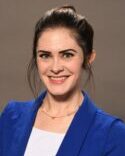
Elizabeth Clark is a Senior Scientist in Sensory & Consumer Sciences at McCormick & Company, Inc. — a global leader in flavor operating in two segments across 170 countries and territories. McCormick’s passion for Sensory & Consumer Science has led to published research on a replacement for the Scoville heat method for the sensory determination of pungency in capsicum products (Gillette, Appel, & Leggo, 1984), The Sensory Quality System (SQS): a global quality control solution (King et.al, 2022), the EsSense Profile®— a scientific measurement of the human emotional response to flavor (King & Meiselman, 2010), and The Wellsense Profile™ — a questionnaire to measure consumer wellness with foods (King et.al, 2015). Leveraging her interest in data analytics & coding, Elizabeth is helping McCormick usher in a new era of sensory research geared toward addressing rapidly evolving challenges faced by global food & beverage companies. Elizabeth earned her BS & MS in Food Science from Kansas State University and her Ph.D. in Food Science from Virginia Polytechnic Institute & State University (i.e., Virginia Tech).
Viktor Mirtchev, CVS

Viktor is a Director of Data and Analytics Strategy in the area of AI and Big Data at CVS. Viktor is the former AI Team leader for Boston Consulting Group, where he provided consulting to industry leading companies in AI. Prior to BCG, as a Senior Manager of Marketing Analytics and R&D for the Kraft Heinz Company, he supported marketing, product development, and quality efforts. He obtained two BS degrees in Statistics and Computer Science, an MS in Applied Statistics, and an MBA.
Neeta Y. Yousaf, Ph.D., Curion Partnership Solutions

Neeta holds a Ph.D. in Food Science with a focus on sensory and consumer science from Rutgers University. She has conducted and published research on individual differences in human perception of astringency and trained at PepsiCo and Nestle Health Sciences as part of her industry experience. She is passionate about teaching sensory science and in her professional role, the application of sensory science principles into categories beyond foods and beverages. She currently manages the sensory claims testing and research program at SC Johnson as part of Curion’s Onsite Partnership Solutions Program in Racine, Wisconsin. Neeta is the 2019 recipient of the prestigious Rose Marie Pangborn Scholarship Award. She is an active member of IFT, SSP, and AChemS and in the past has served various volunteer roles in the IFTSA Board of Directors and local IFT chapters.
Student Reviews

“The descriptive analysis section was packed with information that I will be able to revisit and use with future projects. I loved the combination of chemical/food science information with consumer research and data analysis, allowing all fields to be involved with discussions.”

“I truly enjoyed all aspects of the course. I will use the smell and taste evaluations every week at work.”
“Covered all the different types of tests and ways to evaluate food products, from discrimination tests to consumer testing/acceptance testing to descriptive panels by trained panelists.”
Continuing Education Credits
The most recent offering of Sensory Evaluation was approved for the following credits from professional organizations. We will reapply for similar credits the next time the course runs, but we cannot guarantee credit approval for future offerings.
 New Jersey
NJ Health Officers and Registered Environmental Health Specialists (HO/REHS): Rutgers University, NJAES, Office of Continuing Professional Education has been approved by the New Jersey Department of Health as a provider of NJ Public Health Continuing Education Contact Hours (CEs). Pending
 National
Certified Food Scientists: This program qualifies for Certified Food Scientist (CFS) recertification contact hours (CH). CFS Certificants may claim a maximum of 13 CH for their participation in this program. For more information, please visit www.ift.org/certification or email ifscc@ift.org.
 Meals
Meals Pre-registration/Walk-Ins
 Location Changes
 Campus Parking Policy
 Email Requirement
 Cancellations and Substitutions
Attention U.S. Veterans

This course is approved by the New Jersey State Approving Agency for Veterans Training for educational benefits through the GI Bill®. Learn more.
GI Bill® is a registered trademark of the U.S. Department of Veterans Affairs (VA). More information about education benefits offered by VA is available at the official U.S. government website at http://www.benefits.va.gov/gibill.
Program Questions? We’re Here to Help!
If you have any questions about Sensory Evaluation, please don’t hesitate to reach out to us.
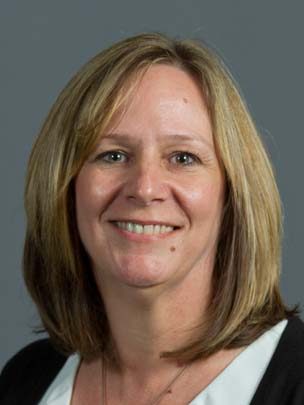
Senior Program Coordinator: Suzanne Hills
848-932-7234
suzanne.hills@rutgers.edu