Main Content
Explore the geology of NJ’s glacial aquifers in this course, which covers glacial sediment, stratigraphy, hydrogeologic behavior, well yields, and more.
Jump to: Register | Course Details | Overview | Instructor | Reviews | CE Credits | Policies | Contact Us | Related Courses | Join Email List
Register Now
Pay with Credit Card:
Pay with Check, PO, or Money Order:
Course Details
Course Name: Glacial Deposits of New Jersey
Course Code: EW0111WA27
Date: September 16, 2026
Time: 9:00 am – 2:00 pm EDT (Log-in time: 8:45 am EDT)
Location: Online
Format: Live, instructor-led
Registration Fee: $325 per person
Multi Person Discount Fee: $295 per person (Save when you sign up with a colleague!)
Rutgers Student Discount Fee: $160 per person
Registration Closes: September 14, 2026
Paying with a check, money order, or purchase order?
Payments should be made out to: Rutgers, The State University of New Jersey
Checks and money orders should be mailed to: Office of Continuing Professional Education, Attn: Registration Dept., 102 Ryders Ln, New Brunswick, NJ 08901-8519
Purchase Orders can be mailed to the address above or electronically sent to registration@njaes.rutgers.edu.
Course Overview
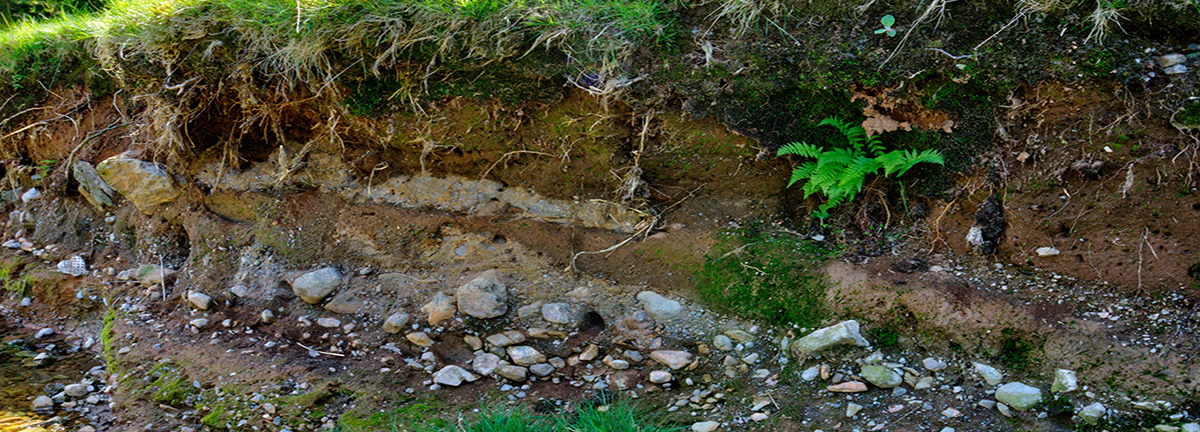
Glacial aquifers provide about 40% of the groundwater supply in northern New Jersey. These aquifers can be highly productive, but they are also susceptible to depletion and pollution due to their small size, locally high permeability, and proximity to the surface. Management and assessment of this valuable groundwater resource starts with an understanding of the geology involved. The quantity and flowpaths of water in the aquifers, and the recharge of water in the aquifers, are determined by the location and extent of permeable sand and gravel aquifer beds and impermeable silt, clay, and till confining beds. The geologic environment and physical processes leading to the deposition of these beds helps to determine their distribution as well.
Featured Topics
The course lectures and accompanying course materials will:
- Provide an overview of the glacial geology of NJ, including the distribution, thickness, and lithology of tills, glacial lake, and glacial stream sediment.
- Describe the processes by which glacial sediment is deposited and the physical character of the sediment itself.
- Outline the stratigraphy and hydrogeologic behavior of the several types of glacial aquifers in NJ.
- Review the well yields, specific capacities, hydraulic conductivities, storativities, flowpaths, and recharge routes for glacial aquifers in NJ.
Although this course is designed for the non-specialist, some familiarity with introductory geologic concepts is helpful.
Who Should Attend?
Environmental professionals seeking a greater understanding of glacial geology can benefit from attending this course. Past participants have included:
- Consultants
- Engineers
- Geologists
- Hydrogeologists
- Licensed Site Remediation Professionals (LSRPs)
- Project Managers/Scientists
Meet Your Instructors
Dr. Scott Stanford, Dept. of Earth & Planetary Sciences, Rutgers University
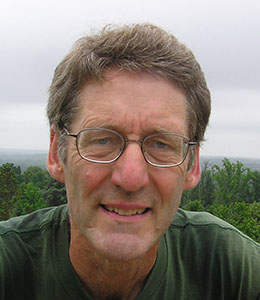
Dr. Scott Stanford earned a B.S. in Geology from the University of North Carolina at Chapel Hill, an M.S. in Geology from the University of Wisconsin—Madison, and a Ph.D. in Geological Sciences from Rutgers University. His research interests include geologic mapping, hydrogeology and engineering geology of surficial deposits, geomorphology, and glacial geology. He is a member of the Geological Society of America and has been published in numerous journal articles and field conference publications.
Student Reviews
Most useful aspect of the course: “Very knowledgeable presenters who made the course interesting and applicable to NJ.”
– Jordan Thomas Kean
Environmental Engineer“Very useful information and good pace for online class.”
– J. Krohn
LSRP, Land Kare Inc.“The course was detailed, and the presenters were all very knowledgeable. Good material to help future planning on projects in northern New Jersey and other studied areas.”
– Ryan P. Cooper
Project Scientist / Environmental ConsultantContinuing Education Credits
The Glacial Deposits of New Jersey course is approved for 0.5 Rutgers CEUs (5 contact hours) as well as the following credits from professional organizations.
 New Jersey
NJ Certified Public Works Managers (CPWM): 4.5 Technical
NJ Drinking Water Operators ONLY (T, W or VSWS): 5 TCHs (Approval #01-122004-10)
NJ Health Officers and Registered Environmental Health Specialists (HO/REHS): Rutgers University, NJAES, Office of Continuing Professional Education has been approved by the New Jersey Department of Health as a provider of NJ Public Health Continuing Education Contact Hours (CEs). CE Credits are pending.
NJ Licensed Site Remediation Professionals (LSRP): 5 Technical CECs
NJ Professional Engineers: 5 Continuing Professional Competency (CPC) Credits
NJ Well Drillers: 5 Technical/Industry CEPs
Course Requirements and Policies
 Technology Requirements
This online course will be delivered via Zoom.
Equipment you will need to access this training:
- A computer, tablet, or smartphone
- Microphone is not necessary (all students will be muted on entry; you can use the “chat function” to type your questions and interact with the instructor)
- Webcam is optional but not necessary
- Speaker is optional but not necessary (you will be able to listen to the presentation by dialing in on your phone if your computer does not have a speaker)
 Email Requirement
A unique email address is required for each registrant to register and access our courses.
- If this is your first time registering with us, please provide your own unique email address when registering; do not provide an email address that you share with co-workers.
- If you have previously taken classes with us and have used an email address that you share with your co-workers or supervisor, your account must be updated with a unique email address. To do this, please send an email to us at registration@njaes.rutgers.edu stating that your email address needs to be changed and include:
- Your full name
- The shared email address that needs to be changed
- Your unique email address
- A phone number where you can be reached if we have any questions
 Cancellations and Substitutions
A $75 cancellation fee applies for this course. Substitutions are permitted. View our cancellation policy.
Attention U.S. Veterans

This course is approved by the New Jersey State Approving Agency for Veterans Training for educational benefits through the GI Bill®. Learn more.
GI Bill® is a registered trademark of the U.S. Department of Veterans Affairs (VA). More information about education benefits offered by VA is available at the official U.S. government website at http://www.benefits.va.gov/gibill.
Program Questions? We’re Here to Help!
If you have any questions about Glacial Deposits of New Jersey, please don’t hesitate to reach out to us.

Senior Program Coordinator: Pamela Springard-Mayer
848-932-7463
pspring@rutgers.edu

Administrative Assistant: Claudine Oleskin
848-932-7204
coleskin@njaes.rutgers.edu
For registration assistance, please contact our Registration Department at 848-932-9271, option 2 or email registration@njaes.rutgers.edu.